Each system is engineered with a focus on:
- retrieval precision
- architectural clarity
- real-world failure modes
- production constraints
Classical Information Retrieval
Systems in this category focus on lexical retrieval, indexing theory, and ranking mechanics — the foundations behind modern search engines.
🔍 DevShelf
Search Engine from First Principles
A distributed vertical search engine for Computer Science literature, built without Lucene or ElasticSearch.
What it demonstrates:
- Positional inverted indices
- TF-IDF–based ranking
- Offline indexing vs online query execution
- Deterministic, explainable retrieval
Retrieval-Augmented Generation (RAG)
These systems extend retrieval pipelines with embeddings, reranking, and large language models, while maintaining strict control over precision and data flow.
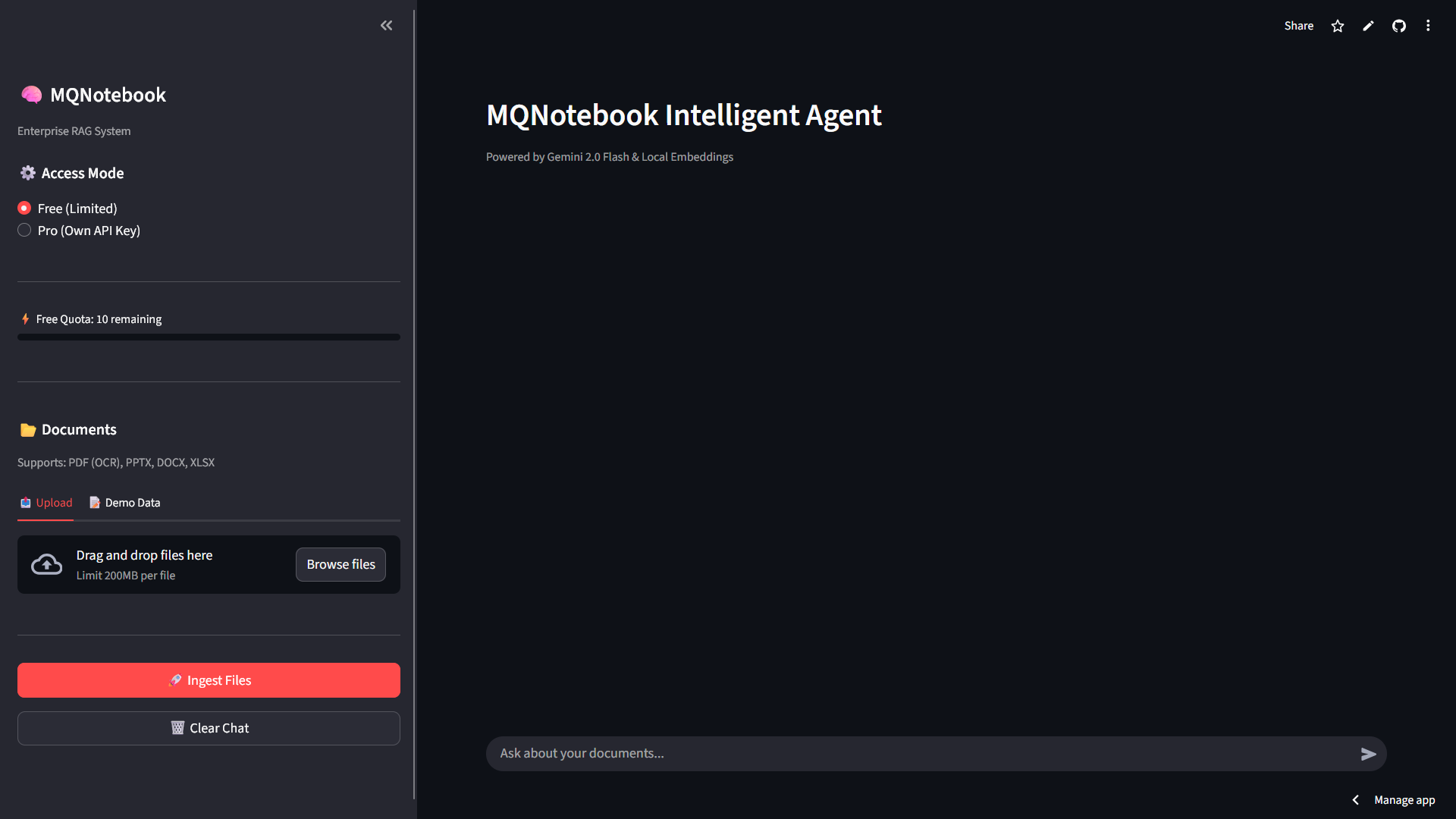
🧠 MQNotebook
Enterprise-Grade RAG System
A local-first RAG engine designed to ingest and retrieve information from messy, real-world enterprise documents.
What it demonstrates:
- OCR-first ingestion for scanned PDFs
- Structured parsing of spreadsheets and slide decks
- Cross-encoder reranking for precision
- Secure, BYOK deployment model
How These Systems Connect
DevShelf establishes a strong foundation in classical information retrieval.
MQNotebook builds on those principles, addressing the limitations of lexical search by introducing semantic retrieval and LLM-based reasoning, while preserving control over relevance and hallucinations.
Together, they represent a complete spectrum of retrieval system design — from first principles to modern AI infrastructure.